
10 Critical Money Mistakes to Avoid in Your 20s
Money Lessons That Will Save You Decades
Last updated: April 2026
Your 20s are when you make money mistakes that cost you decades.
Not months. Not years. Decades.
Every money mistake in your 20s compounds.
A $5,000 mistake at 25 becomes a $50,000 mistake by 45.
Time amplifies everything—good habits and bad ones.
Most people in their 30s and 40s look back at their 20s and say:
- “I wish I’d started investing earlier”
- “I wasted so much money on stupid stuff”
- “I should have avoided that credit card debt”
- “Why didn’t anyone tell me?”
Someone is telling you now. This is your warning.
Here’s the truth about money mistakes in your 20s:
They’re not about being young or irresponsible.
They’re about not knowing what matters.
The financial education system failed you.
The wealthy understand something critical:
Your 20s are your financial foundation.
Build it right, and everything gets easier.
Build it wrong, and you spend your 30s and 40s fixing mistakes.
In this guide, you’ll learn the 10 most critical money mistakes people make in their 20s, why each mistake is so damaging, how to avoid them starting today, what to do instead, real cost examples over decades, and most importantly—how to build wealth in your 20s instead of destroying it.
By the end, you’ll know exactly which money mistakes to avoid and which financial moves to make.
Your future self will thank you.
Why Money Mistakes in Your 20s Cost So Much
Understanding compound damage vs. compound growth.
The Power of Time
Two people, same starting point:
Person A (smart in 20s):
- Age 25: Invests $500/month
- Age 35: Has $77,000
- Age 45: Has $206,000
- Age 65: Has $1,000,000+
Person B (makes money mistakes in 20s):
- Age 25: Spends $500/month on stuff
- Age 35: Starts investing $500/month (10 years late)
- Age 45: Has $77,000
- Age 65: Has $470,000
Same monthly investment. Started 10 years apart.
Difference: $530,000
That’s the cost of money mistakes in your 20s.
Why Your 20s Matter Most
Compounding works exponentially:
$10,000 invested at age 25:
- 40 years to grow
- At 8% return
- Becomes: $217,000
$10,000 invested at age 35:
- 30 years to grow
- At 8% return
- Becomes: $100,000
10-year delay = $117,000 lost
From same $10,000 investment.
Your 20s have the longest runway. Use it or lose it.
Mistakes Compound Too
Good habits compound upward. Bad habits compound downward.
$5,000 credit card debt at 20% APR:
- Paying minimum only
- Age 25: Owe $5,000
- Age 30: Paid $15,000, still owe $3,000
- Age 35: Finally paid off, total paid $25,000
- $20,000 in interest for $5,000 debt
Same $5,000 invested instead:
- Age 25: Invest $5,000
- Age 35: Worth $10,800
- Age 45: Worth $23,300
- Age 65: Worth $108,600
$5,000 debt decision:
- Lost $20,000 to interest
- Lost $108,600 in potential investment growth
- Total cost: $128,600
That’s how one money mistake in your 20s costs over $100,000.
Your 20s = Foundation
Think of your 20s as:
- Building foundation for house
- Weak foundation = Crumbling house later
- Strong foundation = Solid structure forever
Financial foundation built in 20s:
- Good habits vs. bad habits
- Investing vs. spending
- Saving vs. debt
- Skills vs. stagnation
Everything built on this foundation.
Mistake 1: Not Starting to Invest Early (Costs $500,000+)
The biggest money mistake in your 20s.
Why This Is a Mistake
Most people in their 20s:
- “I’ll start investing later”
- “I don’t have enough money”
- “I need to enjoy life first”
- “Retirement is 40 years away”
Meanwhile:
- Years passing
- No investments
- No compound growth
- Future getting poorer
Every year you don’t invest = Permanent wealth lost.
The Real Cost
Example: Starting at 25 vs. 35
Start at 25:
- Invest $300/month
- Ages 25-65 (40 years)
- Total invested: $144,000
- At 8% return
- Age 65 value: $933,000
Start at 35:
- Invest $300/month
- Ages 35-65 (30 years)
- Total invested: $108,000
- At 8% return
- Age 65 value: $408,000
10-year delay cost: $525,000
You invested $36,000 less but lost $525,000 in final value.
That’s the power of starting early.
Why People Make This Mistake
Common excuses:
“I don’t have money to invest”
- Reality: You’re spending it on other things
- $300/month = $10/day
- Lattes, eating out, subscriptions
- Money exists, priorities wrong
“I’ll invest when I make more”
- Reality: You’ll always find reasons not to
- Lifestyle inflation eats raises
- Never “enough” money
- Time keeps passing
“I’m too young to think about retirement”
- Reality: That’s EXACTLY why you should start
- Young = Maximum time = Maximum growth
- Retirement feels far away but arrives fast
“The market is scary/confusing”
- Reality: Index funds make it simple
- Don’t need to pick stocks
- Set it and forget it
- Education available free
What to Do Instead
To start investing in your 20s, Vanguard offers low-cost index funds and easy account setup, making it simple to begin building wealth with small monthly investments.
Start investing NOW, even small amounts:
Month 1:
- Open Roth IRA or brokerage account
- Invest $50-100 (anything!)
- Buy S&P 500 index fund (VOO, FXAIX, SPY)
- Set up automatic monthly investment
Month 2-12:
- Continue automatic investing
- Increase amount when possible
- Never touch it
- Let it compound
Year 2:
- Increase to $200-300/month
- Raise contributions with any pay raises
- Keep automatic investing
Year 5:
- Portfolio growing significantly
- Compound interest visible
- Habit established
- Future secured
The earlier you start, the less you need to invest monthly to reach same goal.
Real Numbers
To have $1 million at 65:
Starting at 25: Need to invest $281/month
Starting at 30: Need to invest $436/month
Starting at 35: Need to invest $671/month
Starting at 40: Need to invest $1,052/month
Wait 5 years? Need to invest 50% more monthly.
Wait 10 years? Need to invest 140% more monthly.
Wait 15 years? Need to invest 275% more monthly.
Time is more valuable than money. Start NOW.
For more on investing early, read What Are Index Funds and The Power of Dividend Investing.
Mistake 2: Carrying High-Interest Credit Card Debt (Costs $50,000+)

Second most expensive money mistake in your 20s
Why This Is a Mistake
Credit card debt is financial poison:
- Interest rates: 18-25% average
- Compounds against you
- Minimum payments mostly interest
- Takes decades to pay off
- Prevents wealth building
$5,000 balance at 20% APR, paying $150/month:
- Time to pay off: 4 years
- Total paid: $7,200
- Interest paid: $2,200
That $2,200 could have been invested and become $15,000 by age 65.
The Real Cost
Typical 20-something with credit card debt:
Age 25:
- Credit card balance: $8,000
- Interest rate: 21% APR
- Minimum payments for 10 years
- Total interest paid: $12,000
- Total paid: $20,000 for $8,000 debt
That $20,000 invested instead:
- At 8% for 40 years
- Becomes: $434,000 at age 65
Credit card debt cost: $434,000 in lost wealth
Plus stress, mental burden, limited opportunities.
Why People Make This Mistake
How it happens:
Gradual accumulation:
- “Just this one time”
- Emergency expenses
- Lifestyle creep
- Minimum payments feel manageable
- Debt grows slowly then suddenly
Minimum payment trap:
- Card company happy (profit from interest)
- You paying mostly interest, not principal
- Balance barely decreases
- Years pass, still in debt
Lack of education:
- Don’t understand compound interest working against them
- Think “everyone has credit card debt”
- Normalize bad financial behavior
What to Do Instead
Avoid credit card debt at all costs:
Strategy 1: Pay in full always
- Use credit card for points/rewards
- But pay statement balance in FULL monthly
- Treat like debit card
- Never carry balance
- Zero interest paid
Strategy 2: If already in debt, avalanche method
- List all debts by interest rate
- Pay minimums on all
- Extra money → Highest interest rate debt
- Once paid, roll payment to next highest
- Snowball effect
Strategy 3: Balance transfer (if good credit)
- 0% APR for 12-18 months
- Transfer high-interest debt
- Pay off during 0% period
- Avoid fees and new purchases
Strategy 4: Emergency fund prevents new debt
- Save $1,000 emergency fund
- Use for unexpected expenses
- Don’t use credit card for emergencies
- Break the cycle
Real Example
Two paths from age 25:
Path A (carrying debt):
- $8,000 credit card debt
- Pays minimums for 5 years
- Total paid: $14,000
- Stress and limited options
Path B (debt-free):
- $0 debt
- Invests $300/month for 5 years
- Total invested: $18,000
- Portfolio worth: $22,000
- $36,000 difference in net worth
After 40 years:
- Path A: Started investing late, has $400,000
- Path B: Invested from start, has $900,000
- $500,000 difference from one debt decision
Credit card debt in your 20s costs half a million dollars in lost wealth.
Mistake 3: Not Building an Emergency Fund (Costs $30,000+ in crises)
Third critical money mistake in your 20s.
Why This Is a Mistake
No emergency fund = Financial instability:
- Car breaks down → Credit card
- Medical bill → Credit card
- Job loss → Panic
- Any emergency → More debt
Emergency fund = Financial stability:
- Car breaks down → Pay cash
- Medical bill → Pay cash
- Job loss → Survive 3-6 months
- Any emergency → Handle it
Without emergency fund, life controls you. With it, you control life.
The Real Cost
Cost of no emergency fund:
Age 25-35 (10 years) without emergency fund:
- Car repair: $2,000 on credit card
- Medical bill: $1,500 on credit card
- Job loss: $5,000 on credit cards to survive
- Moving costs: $2,000 on credit card
- Total emergencies on credit: $10,500
Interest on $10,500 over time:
- At 20% APR
- Paying minimum payments
- Total interest paid: $8,000
- Total paid: $18,500
That $18,500 invested instead:
- At 8% for 30 years
- Becomes: $186,000
No emergency fund cost: $186,000 in lost wealth
Plus stress, anxiety, poor decisions under pressure.
Why People Make This Mistake
Why people don’t build emergency funds:
Feels unnecessary:
- “Nothing bad has happened yet”
- “I’ll deal with emergencies when they come”
- Young = Feel invincible
- Don’t see risk
Competing priorities:
- Want to enjoy money now
- See friends spending
- FOMO on experiences
- “I’ll save later”
Don’t know how much:
- Confused about target amount
- Feels overwhelming
- Don’t start because intimidated
Immediate gratification:
- Spending feels good now
- Saving feels like sacrifice
- Future benefit abstract
- Present desire concrete
What to Do Instead
Build emergency fund in stages:
Stage 1: $1,000 starter fund (1-3 months)
- Goal: Cover small emergencies
- Prevents credit card use
- Fast to achieve
- Builds confidence
Stage 2: $3,000-5,000 (3-6 months)
- Goal: Cover major emergencies
- Car repair, medical, etc.
- Solid buffer
- Real security
Stage 3: 3-6 months expenses (6-12 months)
- Goal: Job loss protection
- Full financial stability
- Can take risks (career changes)
- Ultimate peace of mind
How to build it:
- Automatic transfer $100-200/month to savings
- Tax refunds → Emergency fund
- Side hustle income → Emergency fund
- Found money → Emergency fund
Where to keep it:
- High-yield savings account (4-5% APY)
- Separate from checking (not tempted to spend)
- FDIC insured (safe)
- Easy access when needed
Emergency Fund Impact
Real scenarios:
Without emergency fund:
- Car breaks down: $1,500 repair
- No cash available
- Put on credit card
- Pay 20% interest
- Total cost: $2,000+
- Stress and anxiety
With emergency fund:
- Car breaks down: $1,500 repair
- Pay from emergency fund
- Replenish over 3 months
- Zero interest
- Total cost: $1,500
- Peace of mind
Emergency fund saves money AND stress.
Mistake 4: Lifestyle Inflation With Every Raise (Costs Financial Freedom)
Money mistake that prevents wealth building.
Why This Is a Mistake
Lifestyle inflation = Spending increases with income:
- Get raise → Immediately spend more
- Better apartment, nicer car, more restaurants
- Never save the extra income
- Always living paycheck to paycheck
- Income up, wealth stays flat
Example:
Age 23: Make $40,000/year
- Spend $38,000
- Save $2,000
Age 26: Make $60,000/year (50% raise!)
- Spend $58,000 (upgraded lifestyle)
- Save $2,000 (same as before!)
- $20,000 raise = $0 wealth increase
Income grew. Lifestyle grew. Wealth stayed same.
The Real Cost
Two people with identical raises, different habits:
Person A (lifestyle inflation):
- Age 25: Makes $50k, saves $3k
- Age 30: Makes $70k, saves $3k (upgraded lifestyle)
- Age 35: Makes $90k, saves $3k (upgraded more)
- Total saved in 10 years: $30k
Person B (avoid lifestyle inflation):
- Age 25: Makes $50k, saves $3k
- Age 30: Makes $70k, saves $23k (kept same lifestyle, saved raise)
- Age 35: Makes $90k, saves $43k (kept same lifestyle, saved all raises)
- Total saved in 10 years: $165k
Same income growth. $135,000 difference in savings.
After investing:
- Person A: $40,000 invested over 10 years → Worth $53,000
- Person B: $165,000 invested over 10 years → Worth $232,000
- $179,000 difference from lifestyle choices
Lifestyle inflation steals raises and prevents wealth.
Why People Make This Mistake
Psychological reasons:
Lifestyle expectations:
- “I work hard, I deserve nice things”
- “I make more, I should live better”
- Compare to friends who make similar
- Social pressure to upgrade
Lifestyle creep is invisible:
- Small upgrades feel minor
- $50 more rent, $100 nicer car, $200 more eating out
- Adds up to entire raise
- Don’t notice until stuck
Hedonic adaptation:
- New apartment exciting for 2 months
- Then normal
- Need next upgrade for happiness
- Never satisfied
- Treadmill of spending
What to Do Instead
Keep lifestyle stable, save raises:
Strategy: The 50/50 rule
- Get raise or bonus
- Save 50%
- Enjoy 50%
- Both goals met
Example:
- Current income: $50,000
- Current expenses: $45,000
- Current savings: $5,000/year
- Get raise to $60,000 (+$10,000)
- Increase spending by $5,000 (enjoy life a bit)
- Increase savings by $5,000 (secure future)
- New savings: $10,000/year (doubled!)
Strategy: Keep one major category constant
- Housing: Don’t upgrade apartment with raises
- Transportation: Keep same car for years
- Food: Don’t increase restaurant budget
- Choose ONE to keep constant
- Massive savings
Strategy: Automatic saving
- Set up automatic transfer of raise amount
- Happens before you see money
- Can’t spend what you don’t see
- Painless saving
The Power of Avoiding Lifestyle Inflation
Starting at age 25, keeping modest lifestyle:
Age 25-35 (10 years):
- Income grows $50k → $80k
- Keep lifestyle at $45k level
- Save additional $30k+ from raises
- Invest it all
Age 35 result:
- Investments: $250,000+
- While friends making same money have $50,000
- $200,000 ahead from lifestyle discipline
Age 45:
- Investments: $750,000
- Friends: $200,000
- Could retire early if wanted
Age 55:
- Investments: $2,000,000+
- Financial independence
- Work optional
- All from avoiding lifestyle inflation in 20s-30s
Avoiding lifestyle inflation = Biggest wealth builder besides investing early.
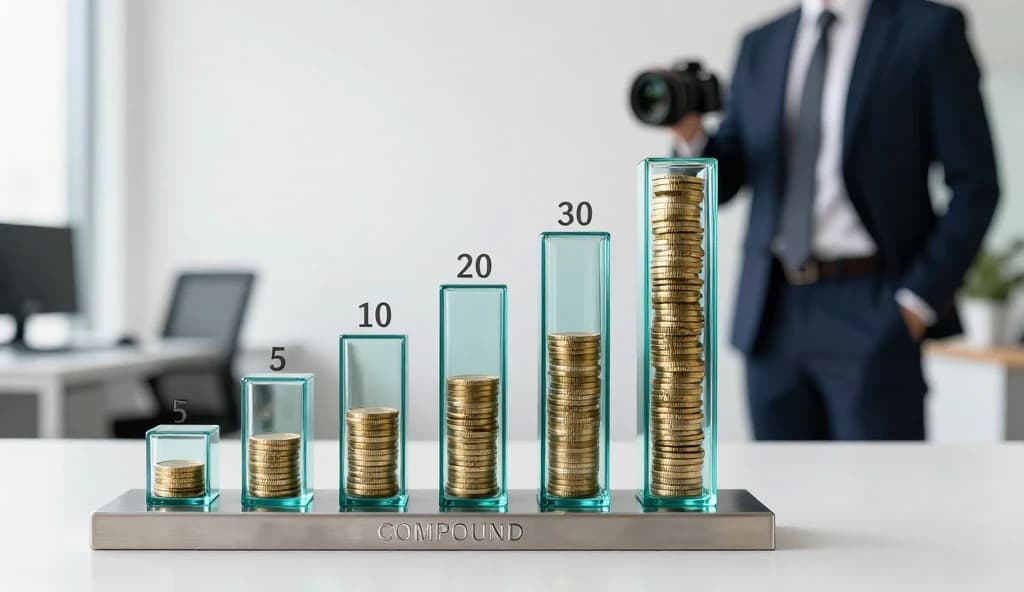
Mistake 5: Not Understanding Compound Interest (Costs Millions)
The most expensive knowledge gap
Why This Is a Mistake
Compound interest = Money making money making money:
- Year 1: $1,000 + 8% = $1,080
- Year 2: $1,080 + 8% = $1,166 (earned $86, not $80)
- Year 3: $1,166 + 8% = $1,260 (earned $94)
- Interest earning interest = Exponential growth
Not understanding this = Missing biggest wealth opportunity:
- Don’t invest early (don’t see the power)
- Keep money in savings (0.01% vs. 8%)
- Pay high interest debt (compound working AGAINST you)
- Miss decades of growth
The Real Cost
Understanding vs. not understanding compound interest:
Don’t understand compound interest (typical):
- Keep $10,000 in regular savings (0.01% interest)
- 40 years later: $10,040
- Thinks “saving is good”
- Actually lost money to inflation
Understand compound interest:
- Invest $10,000 in index funds (8% return)
- 40 years later: $217,000
- $207,000 difference from understanding
Multiply across lifetime:
- Not understanding costs $207,000 per $10,000
- Most people have opportunities for $100,000+ investment over life
- Not understanding costs over $2,000,000 in lifetime wealth
The Rule of 72
Simple way to understand compound interest:
Rule: 72 ÷ Interest Rate = Years to Double
Examples:
- 8% return: 72 ÷ 8 = 9 years to double
- 10% return: 72 ÷ 10 = 7.2 years to double
- 20% debt: 72 ÷ 20 = 3.6 years debt doubles
Applied to your 20s:
$10,000 invested at age 25 (8% return):
- Age 34: $20,000 (doubled once)
- Age 43: $40,000 (doubled twice)
- Age 52: $80,000 (doubled 3x)
- Age 61: $160,000 (doubled 4x)
- Age 65: $217,000
Started with $10,000, ends with $217,000.
21X return from understanding compound interest.
Why People Make This Mistake
Why compound interest is misunderstood:
Not taught in school:
- Most schools don’t teach personal finance
- Graduate without understanding
- Learn by making mistakes
- Costs decades
Seems abstract:
- Can’t see it happening
- Growth slow at first
- Exponential part takes years
- Easy to dismiss
Focuses on wrong numbers:
- Looks at monthly investment ($200)
- Doesn’t see future value ($500,000)
- Present sacrifice feels real
- Future reward feels abstract
What to Do Instead
Leverage compound interest starting NOW:
Step 1: Understand the math
- Use compound interest calculator
- Input: $200/month, 8% return, 40 years
- Output: $622,000
- See YOUR future wealth
Step 2: Start immediately
- Every day delayed = Less final wealth
- $200/month starting at 25 = $622,000 at 65
- $200/month starting at 35 = $290,000 at 65
- 10-year delay = $332,000 lost
Step 3: Never stop
- Compound interest needs TIME
- Stopping and starting ruins it
- Keep investing through market ups and downs
- Trust the math
Step 4: Increase over time
- As income grows, increase investments
- Compound interest on larger amounts = Even bigger growth
- $300/month becomes $933,000
- $500/month becomes $1,555,000
Compound Interest Working For You vs. Against You
For you (investing):
- $5,000 invested at 8%
- 40 years later: $108,600
- You WIN
Against you (credit card debt):
- $5,000 debt at 20%
- Pay minimum 10 years
- Total paid: $15,000
- You LOSE
Choose: Compound FOR you or AGAINST you.
Understanding compound interest = Understanding wealth building.
For more on compound interest through investing, see What Are Index Funds.
Mistake 6: Ignoring Retirement Accounts and Employer Match (Costs $200,000+)
Leaving free money on the table.
Why This Is a Mistake
Many employers offer 401(k) match:
- You contribute 6% of salary
- Employer matches 6%
- Instant 100% return
- Free money
Not taking match = Refusing free money:
- Would you refuse $3,000 bonus? No.
- But that’s what not matching does
- Plus losing decades of compound growth
- Catastrophic mistake
The Real Cost
Example: $50,000 salary, 6% match not taken
Age 25-35 (10 years) ignoring match:
- Lost employer contribution: $3,000/year
- Over 10 years: $30,000 free money lost
- If invested, would grow to: $45,000
- Lost $45,000 from ignoring match
Age 25-65 (40 years):
- Lost employer contribution: $3,000/year × 40 = $120,000
- If invested and compounded at 8%
- Final value: $933,000
- Lost $933,000 from ignoring match for career
Not taking employer match might be the single biggest money mistake.
Why People Make This Mistake
Why people don’t take match:
“I can’t afford it”
- Contributing 6% feels like big sacrifice
- But it’s pre-tax (reduces take-home less than you think)
- And employer adds 6% more (doubles contribution)
- Can’t afford NOT to
“I’ll do it later”
- Always later
- Years pass
- Never “right time”
- Time lost = Money lost
“I don’t understand 401(k)s”
- Seems complicated
- Don’t know how to sign up
- Intimidated
- Avoidance costs fortune
“I want money now”
- 401(k) locked until 59½
- Want to spend today
- Future feels far away
- Short-term thinking = Long-term poverty
What to Do Instead
Take full employer match, minimum:
Step 1: Find out your match
- Ask HR: “What’s our 401(k) match?”
- Common: Match 50-100% up to 3-6% of salary
- Know exact percentage
Step 2: Contribute to get full match
- If match is 6%, contribute 6%
- NOT 5%, NOT 4%, FULL 6%
- This is free money
- Never leave it
Step 3: Increase over time
- Start with match amount
- Raise 1% per year
- Goal: Save 15-20% eventually
- But START with match
Step 4: Choose investments
- Target date fund (easy, automatic)
- Or S&P 500 index fund
- Set and forget
- Let it grow
Real Numbers
$50,000 salary, 6% contribution with 6% match:
Your contribution: $3,000/year
Employer contribution: $3,000/year
Total: $6,000/year invested
After 40 years at 8% return:
- Your $3,000/year contributions: $933,000
- Employer $3,000/year contributions: $933,000
- Total: $1,866,000
Half came from employer match.
You contributed $120,000 over 40 years.
Employer contributed $120,000 over 40 years.
Compound interest added $1,626,000.
Employer match + compound interest = Retirement funded.
Not taking match = Retire poor instead of rich.
Mistake 7: Buying New Cars on Loans (Costs $100,000+ over lifetime)

Massive wealth destroyer disguised as necessity
Why This Is a Mistake
New cars are terrible investments:
- Lose 20-30% value instantly (drive off lot)
- Depreciate 15-20% per year
- High monthly payments ($400-700)
- Years of debt
- Insurance costs higher
- Massive money sink
$30,000 new car bought at 25:
- Car worth $15,000 after 5 years
- Lost $15,000 to depreciation
- Plus interest on loan
- Plus higher insurance
- Total cost: $35,000-40,000
That $35,000 invested instead at age 25:
- Worth $761,000 at age 65
- New car cost: $761,000 in lost wealth
The Real Cost
Lifetime of new car buying vs. used car buying:
Path A (new cars every 5-7 years):
- Age 25: $30,000 new car
- Age 32: $35,000 new car
- Age 39: $40,000 new car
- Age 46: $45,000 new car
- Age 53: $50,000 new car
- Total spent: $200,000 on cars
Path B (reliable used cars):
- Age 25: $10,000 used car
- Age 32: $12,000 used car
- Age 39: $15,000 used car
- Age 46: $18,000 used car
- Age 53: $20,000 used car
- Total spent: $75,000 on cars
Difference: $125,000 saved
Investing that $125,000 difference over lifetime:
- Final value: $500,000-750,000
- New cars cost half a million in wealth
Why People Make This Mistake
Why people buy new cars:
Status and image:
- New car = Success signal
- Impress others
- Keep up with friends
- Trading wealth for appearance
Monthly payment thinking:
- “I can afford $500/month”
- Don’t calculate total cost
- 6-year loan = $36,000+ paid
- Focus on payment, ignore total
Marketing and financing:
- “0% financing!” (extended term)
- “Low monthly payment!” (longer debt)
- Dealership pressure
- Tricks to make expensive seem affordable
Perceived reliability:
- “Used cars break down”
- “New cars are safer”
- Fear of maintenance costs
- Exaggerated concerns, small price premium justified
What to Do Instead
Buy reliable used cars with cash:
Strategy: The $10,000 car method
- Save $10,000
- Buy reliable used car (Honda, Toyota, Mazda)
- 3-5 years old, 30-50k miles
- Keep 5-7 years
- Save for next car while driving it
- No debt, low depreciation, reliable transportation
Best used cars (2026 used market):
- Honda Civic/Accord (2020-2022)
- Toyota Camry/Corolla (2020-2022)
- Mazda 3/CX-5 (2019-2021)
- Hyundai Elantra/Tucson (2019-2021)
Why these work:
- Reliable (low maintenance)
- Depreciation already happened
- 100,000+ mile lifespan remaining
- Parts affordable
- Transportation for 1/3 cost of new
If need loan (avoid if possible):
- Max 3-4 years
- 20%+ down payment
- Used car, not new
- Keep total under 1/2 annual income
- Minimize debt duration and interest
The Wealth Impact
New car habit vs. used car habit from age 25-65:
New cars (as calculated above):
- Spend $200,000 on cars
- Invest $0
- Age 65: $0 from cars
Used cars + investing difference:
- Spend $75,000 on cars
- Invest $125,000 saved
- Age 65: $600,000 from investing savings
Same transportation. $600,000 difference.
New cars feel good. Wealth feels better.
Mistake 8: Not Investing in Skills and Education (Costs Career Growth)
The only investment that can’t be taken away.
Why This Is a Mistake
Your earning power = Your biggest asset:
- 20s: Make $40-60k/year
- 30s: Make $60-90k/year
- 40s: Make $80-120k/year
- 50s: Make $100-150k/year
- Career earnings: $3-5 million over lifetime
Skills determine earning power:
- No skills = Low pay, stuck
- High skills = High pay, options
- Skills compound like investments
- Investing in skills = Investing in lifetime earnings
Not investing in skills = Leaving millions on table:
- Same job for decades
- Small raises
- No advancement
- Limited options
- Career and income stagnate
The Real Cost
Two people starting same job at 25:
Person A (no skill investment):
- Age 25: $45,000/year
- Age 30: $50,000/year
- Age 35: $55,000/year
- Age 40: $60,000/year
- Age 45: $65,000/year
- 20-year career earnings: $1,100,000
Person B (invests in skills):
- Age 25: $45,000/year (same start)
- Age 27: Gets certification, promoted: $60,000
- Age 30: New skills, new company: $75,000
- Age 33: Management role: $95,000
- Age 37: Senior role: $120,000
- Age 40: Director level: $150,000
- Age 45: $180,000
- 20-year career earnings: $2,100,000
Skill investment difference: $1,000,000 in career earnings
Plus:
- Better benefits
- More job security
- More options
- More fulfilling work
Not investing in skills costs over $1 million in lifetime earnings.
Why People Make This Mistake
Why people don’t invest in skills:
Comfort zone:
- Current job feels safe
- Change feels risky
- Don’t see need to learn
- Complacency kills growth
Short-term thinking:
- Learning takes time
- Payoff not immediate
- Would rather relax
- Missing long-term compounding
Don’t know what to learn:
- Overwhelmed by options
- Not sure what’s valuable
- Analysis paralysis
- Inaction from confusion
Cost concerns:
- Courses expensive
- Books cost money
- Time valuable
- Ignoring ROI of education
What to Do Instead
Invest 5-10% of income in skill development:
Types of skill investments:
Hard skills (job-specific):
- Coding bootcamp
- Excel/data analysis
- Certifications (PMP, CPA, etc.)
- Technical courses
- Directly increase earning power
Soft skills (career advancement):
- Communication/public speaking
- Leadership/management
- Negotiation
- Writing
- Enable promotions and raises
Income-generating skills:
- Marketing
- Sales
- Business/entrepreneurship
- Enable side hustles and businesses
Investment ROI:
$2,000 certification:
- Leads to $10,000 raise
- ROI: 500% first year
- Then $10,000 extra EVERY year
- Over 10 years: $100,000 extra income
- Best investment possible
$5,000 bootcamp:
- Career change from $45k to $70k
- Extra $25,000/year
- Over career: $750,000 extra
- 15,000% ROI
$20/month books and courses:
- $240/year investment
- Learn continuously
- Skills compound
- Career and income grow
- Infinite ROI over lifetime
How to Invest in Skills in Your 20s
Year-by-year plan:
Age 22-25 (early 20s):
- Read 1-2 books per month
- Take free online courses
- Learn fundamentals of career
- Build foundation
Age 26-28 (mid 20s):
- Get 1-2 certifications
- Master current role
- Take leadership courses
- Position for promotion
Age 29-30 (late 20s):
- Advanced certifications
- Specialize in valuable niche
- Build expertise
- Command higher salary
By 30:
- Expert in field
- Multiple promotions received
- Earning 50-100% more than peers
- Career momentum building
Skills investment in 20s = High earnings 30s-60s
Mistake 9: Following Friends’ Spending Habits (Costs Your Future)
Peer pressure destroys financial futures.
Why This Is a Mistake
Your friends’ spending = Your money disappearing:
- Friends go out: $50-100 per outing
- 2-3x per week = $400-1,200/month
- Over year: $5,000-15,000
- Nothing to show for it
- Social spending compounds into poverty
Keeping up with friends:
- They buy new car, you buy new car
- They upgrade apartment, you upgrade
- They vacation, you vacation
- They get designer clothes, you get designer clothes
- Their choices control your finances
Problem: You don’t know their situation:
- They might have family money
- They might be in debt (pretending)
- Different salaries
- Different priorities
- Comparing yourself to unknown situations
The Real Cost
Following friends’ spending vs. independent choices:
Follower (peer pressure spending):
- Age 25-30 (5 years)
- Social spending: $800/month
- Vacations: $3,000/year
- Keeping up: $2,000/year
- Total: $14,000/year = $70,000 in 5 years
- Savings: $0
Independent (conscious choices):
- Social spending: $300/month (selective)
- Vacations: $1,500/year (budget travel)
- Keeping up: $0 (don’t care)
- Total: $5,100/year = $25,500 in 5 years
- Savings: $44,500
Investing that $44,500 at age 30:
- At 8% for 35 years
- Worth: $657,000 at 65
Following friends cost: $657,000
Plus years of financial stress trying to keep up.
Why People Make This Mistake
Why peer pressure wins:
FOMO (fear of missing out):
- Friends having fun without you
- Feel left out
- Social media amplifies
- Emotional decisions override financial logic
Social identity:
- Want to belong
- Show success
- Maintain friendships
- Spending = Acceptance (false belief)
Lack of boundaries:
- Can’t say no
- Feel guilty
- Don’t want to explain finances
- Easier to spend than explain
Don’t see long-term cost:
- $100 night out feels small
- Times 50 per year = $5,000
- Over 10 years = $50,000
- Could be $200,000 invested
- Can’t see compound cost
What to Do Instead
Be selective about social spending:
Strategy 1: Budget for social
- Set monthly social budget ($200-300)
- Attend some events, skip others
- When budget gone, done for month
- Control spending, maintain friendships
Strategy 2: Suggest cheaper alternatives
- Instead of $100 dinner: $20 casual meal
- Instead of $50 bars: House gathering
- Instead of $3,000 vacation: Road trip
- Fun without bankruptcy
Strategy 3: Find like-minded friends
- Seek friends with similar financial goals
- Support each other in saving
- Do free/cheap activities together
- Positive peer pressure instead of negative
Strategy 4: Be honest about finances
- “I’m saving for a house”
- “I’m paying off debt”
- “I’m investing for future”
- Real friends understand
- Fake friends judge
The Power of Financial Independence from Peers
Ignoring peer pressure from age 25-35:
Save $8,000/year that friends spend:
- Over 10 years: $80,000 saved
- Invested at 8%
- Age 35: Worth $116,000
Continue saving age 35-65:
- That $116,000 keeps growing
- Age 65: Worth $1,165,000
Peer pressure resistance = $1,165,000
Meanwhile, friends who pressured you:
- Still living paycheck to paycheck
- Wondering why broke
- Still trying to impress
- No wealth despite high spending
Your choice: Impress friends now or retire wealthy.
Mistake 10: Not Tracking Where Money Goes (Costs Control)

Can’t manage what you don’t measure
Why This Is a Mistake
Not tracking spending = Money disappearing:
- “Where did my paycheck go?”
- “I don’t spend that much…”
- Small purchases invisible
- No awareness, no control
- Money vanishes mysteriously
Typical scenario:
- Make $3,500/month
- Rent: $1,200
- Car: $400
- Utilities: $150
- Food: ???
- Entertainment: ???
- Shopping: ???
- Misc: ???
- $1,750 left = $0 saved
Without tracking, the $1,750 “mystery spend” prevents wealth.
The Real Cost
Not tracking vs. tracking:
No tracking (typical):
- Income: $4,000/month
- Fixed expenses: $2,200
- Everything else: ???
- End of month: $0 left
- Savings: $0
- Where did $1,800 go? No idea.
Tracking:
- Income: $4,000/month
- Fixed expenses: $2,200
- Track everything else: $1,300
- Discovered: $500 wasteful spending
- Cut waste, save $500/month
- $6,000/year saved
Over 10 years:
- Not tracking: $0 saved
- Tracking: $60,000 saved
- Invested: $87,000 at age 35
Tracking costs time. Not tracking costs fortune.
Why People Make This Mistake
Why people don’t track money:
Ignorance is bliss:
- Don’t want to see bad habits
- Uncomfortable reality
- Prefer not knowing
- Avoidance of truth
Seems tedious:
- “Who has time to track every purchase?”
- Feels like homework
- Boring and restrictive
- Excuses preventing wealth
Don’t know how:
- Seems complicated
- What tools to use?
- How much detail needed?
- Overwhelm from not starting
Fear of restriction:
- “I’ll have to stop buying things I enjoy”
- Tracking = Budget = No fun (false)
- Rather live freely (and broke)
- Short-term pleasure over long-term wealth
What to Do Instead
Track every dollar for 30 days minimum:
Method 1: App tracking (easiest)
- Mint, YNAB (You Need A Budget), Personal Capital
- Links to accounts
- Automatic categorization
- Visual reports
- See where money actually goes
For automatic spending tracking, Mint links to your accounts and categorizes transactions automatically, making it easy to see where your money goes without manual entry.
Method 2: Spreadsheet
- Manual entry
- Complete control
- Customizable categories
- More awareness (entering each purchase)
Method 3: Cash envelopes (physical)
- Withdraw cash for categories
- When empty, done spending
- Very visual
- Harder to overspend
What to track:
- Income (all sources)
- Fixed expenses (rent, utilities, insurance)
- Variable expenses (food, gas, entertainment)
- Savings/investments
- Debt payments
After 30 days:
- Review spending report
- Find “leaks” (wasteful spending)
- $8/day coffee = $240/month = $2,880/year
- Identify what to cut
- Redirect to savings/investing
The Tracking Revelation
Common discoveries after tracking:
“I spend $400/month eating out”
- Thought it was $150
- Cut to $200 (still enjoy, but conscious)
- Save $200/month = $2,400/year
“Subscriptions I don’t use: $80/month”
- Gym: $50 (go 2x/year)
- Streaming: $30 (don’t watch)
- Cancel = $960/year saved
“Convenience spending: $300/month”
- Uber instead of bus
- Delivery instead of cooking
- Last-minute purchases
- Cut half = $1,800/year saved
Total waste discovered: $5,000/year
Invested over 40 years: $1,293,000
Tracking revealed $1.3 million in waste.
Not tracking = Hemorrhaging wealth without knowing.
What to Do Instead: Smart Money Moves for Your 20s
Replace mistakes with winning strategies.
The 20s Wealth Building Plan
Foundation (Age 22-25):
- Start investing $100-300/month (anything!)
- Build $1,000 emergency fund
- Take full employer 401(k) match
- Avoid credit card debt
- Track spending
- Focus: Build good habits
Growth (Age 26-28):
- Increase investing to $500-1,000/month
- Emergency fund to 3 months expenses
- Max Roth IRA ($7,000/year in 2026)
- Invest in skills (certifications, courses)
- Negotiate raises
- Focus: Accelerate wealth
Momentum (Age 29-30):
- Investing $1,500+/month
- Emergency fund: 6 months expenses
- Max 401(k) + Roth IRA
- Net worth: $100,000+
- Multiple income streams
- Focus: Compound momentum building
By age 30:
- $100,000-200,000 net worth
- Strong financial habits
- Career growing
- No debt (or minimal)
- Financial confidence
- Positioned for wealthy 30s-60s
The Simple Formula
Your 20s wealth formula:
(Income – Expenses) × (Time + Compound Interest) = Wealth
Increase income: Skills, raises, side hustles
Decrease expenses: Avoid mistakes, conscious spending
Maximize time: Start NOW, not later
Leverage compound interest: Invest consistently
Follow formula = Guaranteed wealth
Real Cost Examples: Mistakes vs. Smart Moves
Exact numbers over lifetime.
Scenario 1: Investing Early vs. Late
Mistake (start at 35):
- Ages 35-65: Invest $500/month
- Total invested: $180,000
- End value: $745,000
Smart (start at 25):
- Ages 25-65: Invest $500/month
- Total invested: $240,000
- End value: $1,742,000
10-year delay cost: $997,000
Scenario 2: Credit Card Debt vs. Investing
Mistake (carry $8,000 debt age 25-30):
- Pay $250/month for 5 years
- Total paid: $15,000 for $8,000 debt
- Lost $7,000 to interest
- Nothing invested
Smart (no debt, invest instead):
- Invest $250/month for 5 years
- Total invested: $15,000
- Value at 30: $18,000
- Value at 65: $265,000
Debt decision cost: $265,000
Scenario 3: New Cars vs. Used Cars
Mistake (new cars every 6 years age 25-65):
- 7 new cars: $35,000 average
- Total spent: $245,000
- End value: $0 (depreciated)
Smart (used cars + invest difference):
- 7 used cars: $12,000 average
- Total spent: $84,000
- Difference: $161,000 invested
- End value: $2,100,000
New car habit cost: $2,100,000
Scenario 4: Following Friends vs. Independent
Mistake (peer pressure spending age 25-35):
- Social spending: $10,000/year
- Total spent: $100,000
- Memories: Priceless (or forgotten)
- Savings: $0
Smart (selective spending age 25-35):
- Social spending: $4,000/year
- Total spent: $40,000
- Saved: $60,000
- Invested: Worth $88,000 at 35
- Worth $662,000 at 65
Peer pressure cost: $662,000
Total Cost of All Mistakes Combined
Making all 10 money mistakes age 25-65:
- Not investing early: -$1,000,000
- Credit card debt: -$265,000
- No emergency fund: -$186,000
- Lifestyle inflation: -$200,000
- Not understanding compound interest: -$2,000,000
- Ignoring 401(k) match: -$933,000
- New cars: -$2,100,000
- No skill investment: -$1,000,000 (career earnings)
- Following friends: -$662,000
- Not tracking spending: -$1,293,000
Total cost: $9,639,000
Avoiding these mistakes = $10,000,000 wealthier life
Your 20s money decisions = $10 million impact
Frequently Asked Questions – FAQ 👈
Q: Is it too late if I’m already 28 and made these mistakes?
A: No. Fix them now and still build significant wealth.
At 28 you have:
- 37 years until 65
- Plenty of time for compound growth
- Decades of earning ahead
Action plan:
- Stop mistakes TODAY
- Start smart moves THIS MONTH
- Invest aggressively 28-38 (make up lost time)
- Still achieve $1,000,000+ by 65
28 is young. 38 is young. Even 48 has time.
Start now = Better than starting later.
Q: I’m making $35,000/year. How can I invest when I can barely survive?
A: Start with whatever possible, even $25/month.
$25/month from age 25-65:
- Total invested: $12,000
- End value: $77,000
- Better than $0
As income grows:
- $35k → $45k: Increase to $100/month
- $45k → $60k: Increase to $300/month
- $60k+: Increase to $500+/month
Starting small > waiting until “enough” money
Q: Should I pay off student loans or invest?
A: Depends on interest rate.
Student loan interest rate:
Under 4%:
- Pay minimums
- Invest extra money
- Investment returns (8%) beat loan interest (4%)
- Invest first
Over 6%:
- Pay off aggressively
- Then invest
- Loan interest too high
- Debt first
4-6%:
- Split approach
- Some extra to loans, some to investing
- Balance both goals
Q: How much should I have saved by 30?
A: Target 1x annual salary, but any progress is good.
Ideal target by 30:
- Income: $60,000
- Savings/investments: $60,000
- 1x salary saved
Realistic ranges:
- Excellent: 1-2x salary
- Good: 0.5-1x salary
- Okay: $20,000-50,000
- Started late: $10,000-20,000
Don’t beat yourself up if behind. Focus on trajectory going forward.
Q: Can I still enjoy my 20s while avoiding these mistakes?
A: Yes. It’s about balance, not deprivation.
Balanced approach:
- Save 20% income (future)
- Spend 80% (present)
- Within spending, be intentional
- Travel, experiences, fun
- But avoid waste and bad debt
You can:
- Invest $500/month
- Have fun with $2,000/month
- Build wealth AND enjoy life
It’s not either/or. It’s both/and.
Q: What if my friends think I’m cheap?
A: Real friends support your goals. Others aren’t real friends.
Truth about friends:
- Real friends understand financial goals
- Real friends want you to succeed
- Real friends find ways to hang out affordably
“Friends” who pressure you to spend:
- Not real friends
- Don’t care about your future
- Often broke themselves
- Pull you down with them
Choose: Temporary friend approval or lifetime wealth.
For managing money wisely, see our guide on the 50/30/20 budget rule.
Your Money Action Plan for Your 20s
30-day plan to avoid mistakes and build wealth.
Week 1: Assessment
Day 1-2: Calculate current situation
- List income
- List all expenses
- Calculate savings rate
- See current reality
Day 3-4: Identify mistakes you’re making
- Review all 10 mistakes
- Check which apply to you
- No judgment, just awareness
- Know what to fix
Day 5-7: Set goals
- Emergency fund target
- Investment amount
- Debt payoff timeline
- Savings rate goal
- Define your 20s financial plan
Week 2-3: Stop the Bleeding
Actions:
- Cut credit card if carrying balance
- Cancel wasteful subscriptions
- Set up spending tracker
- Create basic budget
- Stop hemorrhaging money
Week 4: Start Building
Critical actions:
- Open Roth IRA or brokerage account
- Set up automatic investment ($50-500/month)
- Sign up for 401(k) (get match!)
- Start emergency fund ($50-100/month)
- Foundation in place
Month 2-3: Build Momentum
Continue:
- Track spending daily
- Perfect month with automatic investments
- No credit card debt accumulated
- Emergency fund growing
- Habits forming
Month 4-6: Accelerate
New actions:
- Increase investing 10-20%
- Ask for raise or seek higher-paying job
- Start side hustle
- Read 2-3 personal finance books
- Growth accelerating
Month 7-12: First Year Complete
Review progress:
- Net worth increased (hopefully)
- Good habits established
- Emergency fund growing
- Investments compounding
- Foundation solid
Age 23-25: Build Foundation
✅ Emergency fund: $1,000-3,000
✅ Investing: $100-300/month
✅ No credit card debt
✅ Taking employer match
✅ Tracking spending
Age 26-28: Accelerate Growth
✅ Emergency fund: 3-6 months expenses
✅ Investing: $500-1,000/month
✅ Maxing Roth IRA
✅ Net worth: $50,000-100,000
✅ Career progressing
Age 29-30: Momentum Building
✅ Emergency fund: Complete
✅ Investing: $1,000-1,500/month
✅ Net worth: $100,000-200,000
✅ High income
✅ Financial confidence
BY AGE 30: SET FOR LIFE
With solid foundation built in 20s:
- Compound interest working
- Good habits established
- Career growing
- Wealth building
- 30s-60s will be financially successful
Your 20s = Most important financial decade
🎥 BONUS
Want to see real people who avoided these money mistakes and built wealth young?
This video shows their journeys:
FINAL THOUGHTS: Your 20s Decide Your Financial Life
Here’s what most people don’t understand:
Your 20s feel like they don’t matter financially.
You’re young. Not making much money. Just starting out.
“I’ll get serious about money in my 30s.”
By your 30s, it’s too late for some things.
Not too late to build wealth. But too late for EASY wealth.
Here’s the truth:
Every financial decision in your 20s multiplies by 40 years.
$5,000 credit card debt at 25:
- Seems small
- Just one mistake
- But compounds for decades
- Costs $100,000+ in lost wealth
$200/month invested at 25:
- Seems small
- Just tiny amount
- But compounds for decades
- Becomes $622,000
Small decisions. Massive outcomes.
Most people in their 30s, 40s, 50s look back and say:
“I wish I’d known this in my 20s.”
You know it NOW.
You have something they didn’t have: This knowledge at the right time.
After following this advice from age 25:
Age 30:
- Net worth: $150,000
- Peers: $20,000
- “Started well”
Age 40:
- Net worth: $650,000
- Peers: $200,000
- “Wealthy compared to others”
Age 50:
- Net worth: $2,000,000
- Peers: $500,000
- “Financial independence achieved”
Age 65:
- Net worth: $5,000,000+
- Peers: $1,000,000
- “Multi-millionaire from smart 20s”
All from avoiding 10 money mistakes and making smart moves instead.
The question isn’t “Can I build wealth in my 20s?”
The question is: “Will I avoid the mistakes that destroy it?”
You’ve read this guide.
You know the mistakes.
You know the costs.
You know what to do instead.
What you do in the next 30 days determines your next 40 years.
Choose one action from this guide.
Do it today.
Step 1: Open investment account.
That’s it. Just that one action.
Tomorrow: Set up automatic $100/month.
Next week: Track spending.
Next month: Increase investing.
Repeat for 10 years.
By 35: You’re financially ahead of 95% of people.
Others made the 10 money mistakes.
You avoided them.
That’s the difference between wealthy life and struggling life.
Your 20s end eventually.
Your 20s money decisions last forever.
Make them count.
INTERESTING TOPICS
Want to learn about building credit score from scratch in your 20s?
Ready to understand getting out of debt when broke if you made mistakes?
Need strategies for making money from home to increase income?
Want more financial insights delivered to you? Subscribe to our newsletter
and get weekly articles with practical strategies to grow your wealth sent straight to your inbox.
Obs: Sign up for our newsletter and receive a free Finance For Beginner eBook.
Disclaimer: This article is for educational purposes only and should not be considered financial advice. Budgeting approaches should be tailored to individual circumstances, income levels, and financial goals. The examples provided are for illustrative purposes and may not reflect your specific situation. The 50/30/20 rule is a guideline and may need adjustment based on your cost of living, debt obligations, and personal priorities. Consider consulting with a financial advisor for personalized guidance on managing your finances and creating a budget that works for your unique situation.
—— End of Article ——